I have been viewing the numerous developments in process safety in India with great interest. The Indian Chemical Council has taken a big interest in Process Safety and is collaborating with the Center for Chemical Process Safety of the US. While it is good that a great awareness of Process Safety Management is being created in India, where does the buck stop as far as Process Safety Management goes? The composition board of directors of many chemical organisations in India are changing with fewer and fewer companies having technically qualified people at the helm.With due respect to the immense experience that other directors bring, I see an erosion in technical competence at the board level. While risk based process safety does bring in process safety metrics to the board's attention, it needs technical competence to analyse these metrics. Ultimately, the culture of the organisation trickles down from the decisions that the board takes. What is the long term solution to this issue? No amount of management systems is going to avoid a catastrophic incident. They will warn you adequately before a big incident happens, but unless someone at the board level is competent to analyse these warnings, you cannot prevent the incident. It boils down to basic human behaviour. Is a director on the board going to pay more attention to what another technically competent director is saying, or to the various process safety metrics he sees displayed but may not fully understand? I leave it to you to decide...
Meanwhile read an interesting article in the Fortune magazine in this link.
August 8, 2010
August 6, 2010
Drum bursting hazard - readers innovation
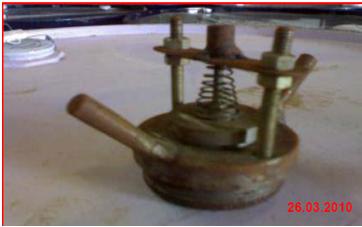
In my earlier post , I had mentioned an incident on the dangers of pesticide technical drums bursting when placed in a hot box or steam heated bath. A couple of readers Mr P.Kadhiravan and Mr P.Thulasiraman of Coromandel International Limited have devised a simple pressure relief system for the technical drums which they place in a steam bath for melting. Their pressure relief device is screwed on to the drum in the bung area after removing the drum cap. A photo of their innovation is shown. Kudos to them! And thanks to them for sharing this information.
Share your incidents!
I thank readers of this blog for their continued support. I request readers to send in short descriptions of process incidents they know, to me at bkprism@gmail.com for publication in the blog. I will give the reader credit for the input. The company's name need not be mentioned.Thanks in advance!
August 3, 2010
Enforcing Process Safety Management
I always wonder that even in the US where PSM is mandatory and companies face stiff fines, there are always violations taking place. Recently OSHA has proposed to fine a seafood company a total of $279,000, for deficiencies in its process safety management program. "The inspection identified other PSM hazards that resulted in 12 serious citations, with $84,000 in proposed fines. These conditions included failing to update process safety information, conduct an incident investigation of a January 2001 ammonia leak, certify or evaluate the PSM program every three years as required, establish and implement procedures to maintain changes in the process, and provide and document employee training".
Read the full article in this link
Engineering control to avoid deaths
The recent train accident at Sainthia station when a speeding train rammed into a stationary one,has raised many questions.An excellent article in Forbes India magazine describes the various engineering controls that are available to prevent such accidents. The article mentions that "There is a range of technological solutions that can remove the scope for human error and make the system fool-proof. The Indian Railways have experimented with a range of solutions to improve its safety record, but none of them has been scaled up nationwide either due to the lack of budget or simply because the powers-that-be had other priorities. When asked, a senior executive in the Indian railways, in charge of technology implementation, prefers to maintain a stoic silence on the issue. Former railway officials, however, are far less sanguine. “The job must be ruthlessly done and the management must not shy away from shedding blood,” says a former Chairman Railway Board who did not wish to be quoted".
In the chemical process industry also, I observe many cost cutting initiatives affecting engineering controls. As long as nothing happens, nobody dies!
Read the full article in this link.